Toilet Repair in Fountain Valley, CA
Fountain Valley is a suburban city in central Orange County, California, incorporated on June 13, 1957, with a population of 57,047 in the 2020 census and a land area of about nine square miles. Most of its housing was built in the 1960s and 1970s as detached single-family tract homes on flat lots, and that housing history shapes the toilet problems local professionals see most often: worn tank parts, weak flushes from mineral buildup, and base leaks from seals that have failed under toilets that have been in daily use for decades.
Toilet repair assistance for homes, rentals, and local properties.
Calls may be routed to an independent local service provider.
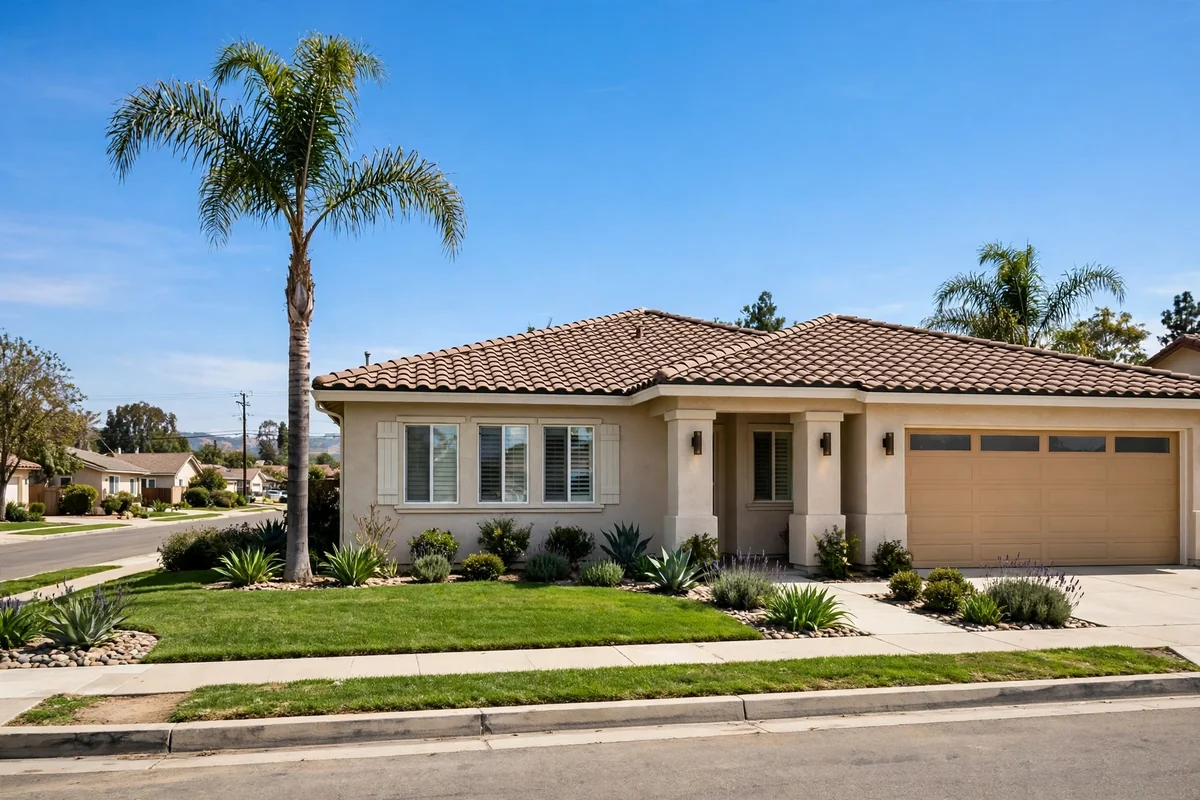
A single-story home in a sunny Orange County neighborhood.
Fountain Valley at a Glance
| Fact | Detail |
|---|---|
| Location | Suburban city in central Orange County, California, between Huntington Beach and Santa Ana. |
| Incorporated | June 13, 1957, as the 21st city in Orange County. |
| Population | 57,047 in the 2020 census. |
| Area | About nine square miles, with 0.14 percent water. |
| ZIP codes | 92708 and 92728. |
| Main freeway | Interstate 405, the San Diego Freeway, runs diagonally through the city. |
| Borders | Huntington Beach to the south and west, Westminster and Garden Grove to the north, Santa Ana to the northeast, Costa Mesa to the southeast. |
| Landmark park | Mile Square Regional Park, 640 acres bounded by Edinger and Warner Avenues and Brookhurst and Euclid Streets. |
| Housing | Mostly detached single-family tract homes built in the 1960s and 1970s, with condominiums, townhomes and rental properties throughout the city. |
Neighbourhoods Across Fountain Valley
Green Valley is the master-planned community south of Talbert Avenue and west of Brookhurst Street, built in the 1960s and 1970s around a network of interior greenbelts, pools and clubhouses run by the neighbourhood association. Its homes are mostly three- and four-bedroom single-story and two-story tract homes on lots of about 6,000 to 7,000 square feet, with greenbelt paths connecting to Mile Square Regional Park. A home in Green Valley that still has its original bathroom layout will have a toilet that has been replaced at least once, and the mix of older and newer fixtures in the same house is common.
The blocks around Mile Square Regional Park, between Brookhurst Street, Euclid Street, Edinger Avenue and Warner Avenue, hold similar 1960s and 1970s tract homes, with the park itself as the defining feature of the area. Mile Square Regional Park covers 640 acres, about one square mile, and contains two lakes, golf courses, playing fields, picnic shelters, a nature area planted with California native plants, and a recreation centre with tennis and basketball courts. The park began as a naval landing field purchased by the Navy in 1942, and Orange County leased the site for park purposes in 1967. Homes around the park include single-family residences and condominiums, and the area also holds Fountain Valley Regional Hospital and medical offices along Euclid Street.
Westmont is one of the most recognised neighbourhood identities in Fountain Valley, built mainly between the 1960s and 1980s on generous interior lots close to Mile Square Park, with a mix of single-family homes, townhouses and condominiums. Los Caballeros, in the southern part of the city, has a mix of ranch-style and contemporary homes. The Talbert and Garfield area near Fountain Valley High School, in the southwest of the city near the Huntington Beach border, holds tracts built between Newland Street, Bushard Street, Talbert Avenue and Garfield Avenue. The Euclid and Edinger corridor in the northeast has older 1960s single-story tracts, close to the 405 at Euclid and to the Fountain Valley Town Center. Central Fountain Valley, around Brookhurst Street and Warner Avenue, holds the civic core, including City Hall and the Fountain Valley Recreation Center, with single-story ranch-style homes from the 1960s and 1970s.
That neighbourhood pattern matters for toilet repair because the age of a home is the strongest predictor of the age of its toilets, and the age of a toilet is the strongest predictor of which parts are likely to fail. A home in Green Valley or Westmont that has never had a full bathroom remodel will have toilets that have been in service for decades, with rubber parts that have been replaced at least once. A condominium near Mile Square Park may have a newer toilet but a shared drain. A rental property anywhere in the city may have a toilet whose history the current tenant does not know. Each of those situations points to a different first check, and a local professional who knows the neighbourhoods can usually tell from the address and the symptom which one applies.
Why Fountain Valley Homes Have the Toilet Problems They Do
Fountain Valley was farmland until the freeways arrived, and almost all of its housing came after incorporation in 1957, with detached single-family homes built through the 1960s and 1970s on generous flat lots. That means most Fountain Valley homes are now fifty to sixty years old, and their bathrooms have seen several generations of fixtures. A house built in 1968 may have had its toilets replaced in the 1980s, again in the 1990s when the first low-flow models arrived, and again in the 2010s with a WaterSense model, or it may still have a toilet from one of those earlier replacements. The result is a city where no two bathrooms are quite the same age inside, and where the parts that fit one toilet do not always fit another.
The early low-flow toilets installed in many Fountain Valley homes in the 1990s are a particular local pattern. Those first 1.6-gallon models often did not flush with enough force, and some still clog every week with normal use even though nothing is wrong with the drain. If the rim jets are clean, the tank level is correct and the toilet still clogs, the bowl itself is the limitation, and a modern WaterSense toilet that flushes at 1.28 gallons per flush will usually clear the bowl far more reliably than the 1990s model it replaces. The toilet replacement page explains that decision in detail.
Hard water is the other long-term factor. The water across Orange County leaves mineral deposits inside toilets over time, and those deposits build up in the small rim jets under the bowl rim, on the flapper seat, and inside the fill valve. A toilet that flushed strongly when it was new can lose power gradually over years without any single event to blame, and a flapper that sealed cleanly when new can start to seep as deposits build up on its seat. That slow decline is one reason a toilet that has never been a problem can start running or clogging in its second or third decade of use. Cleaning the rim jets and replacing a hardened flapper are two of the most common answers to that decline in Fountain Valley homes.
Supply valves and wax rings also age with the house. A shutoff valve that has not been turned in years can seize or weep when it is finally moved, and a wax ring under a toilet that has rocked for years eventually fails. Flooring changes are a common trigger: when a bathroom floor is retiled or a new floor is laid over the old one, the finished floor level rises, and the flange that was level with the old floor now sits below the new one. A wax ring can bridge a small difference, but a flange that sits too low leaves the seal thin and vulnerable. That is why a toilet should be checked after any bathroom flooring work in a Fountain Valley home, and why a flange that is too low should be raised rather than bridged with extra wax.
Common Toilet Problems in Fountain Valley
- Running toilets from flappers that have hardened with age and mineral deposits, so tank water seeps into the bowl and the fill valve keeps topping the tank up.
- Weak flushes from rim jets blocked by mineral buildup, low tank water levels, and early low-flow bowls that no longer flush with enough force.
- Recurring clogs in older toilets, and in toilets where wipes or too much paper have been flushed, or where an object is caught in the trap.
- Base leaks from wax rings that have failed under toilets that rock, especially after a bathroom floor has been changed or a toilet has been reset without checking the flange.
- Supply line and shutoff valve leaks in bathrooms where the valve has not been turned in years and has seized or corroded.
- Toilets that will not flush because the handle, chain or flapper has worn out, or because the fill valve no longer refills the tank properly.
- Overflows from clogs that were flushed again instead of being cleared, and from toilets whose shutoff valve was not turned off in time.
What to Have Ready When You Call From Fountain Valley
- Your address in Fountain Valley, including the neighbourhood if it helps the local professional find the property.
- Which bathroom and which toilet is affected, and whether it is the only working toilet in the home.
- A short description of the symptoms: does the toilet run, clog, leak, flush weakly, or not flush at all?
- When the problem started, and whether it has happened before.
- Whether other fixtures are affected, for example whether the tub gurgles when the toilet flushes.
- Whether water is on the floor, and if so, whether it appears after flushing or all the time.
- The age of the toilet if you know it, and the make and model if it is marked inside the tank.
- Whether the property is a rental or a multi-unit building, and which unit and floor the toilet is on.
Nearby Areas Around Fountain Valley
Fountain Valley is surrounded by Huntington Beach to the south and west, Westminster and Garden Grove to the north, Santa Ana to the northeast, and Costa Mesa to the southeast, with Seal Beach and Newport Beach a short drive further on. Help is available in those nearby communities as well, and the service areas page lists each one with its housing notes. Many households in those cities have the same housing patterns as Fountain Valley, with 1960s and 1970s tract homes, condominiums and rental properties, and the same toilet problems appear in all of them.
The city holds an annual Summerfest in June in Mile Square Regional Park, and the park remains the most widely known landmark in Fountain Valley, bounded by Edinger and Warner Avenues on the north and south and Brookhurst and Euclid Streets on the west and east. Each side measures about one mile, which is how the park gets its name. For a visitor, the park is the easiest way to orient yourself in the city: the neighbourhoods around it, Green Valley to the south, the Euclid and Edinger corridor to the northeast, and Central Fountain Valley to the west, each have their own character, but they share the same flat street grid and the same era of housing.
Call for Toilet Repair in Fountain Valley, CA
Call now to describe your toilet problem and your Fountain Valley address, and connect with a local toilet repair professional who can discuss the help available for your home.
Fountain Valley Toilet Repair Pros is a referral service connecting customers with local toilet repair professionals; it is not itself the service company.
Frequently Asked Questions
What neighbourhoods in Fountain Valley do you cover?
Help is available throughout Fountain Valley, including Green Valley, Westmont, Los Caballeros, the Mile Square Park area, Central Fountain Valley, the Talbert and Garfield neighbourhoods, and the Euclid and Edinger corridor. The city covers about nine square miles, with ZIP codes 92708 and 92728.
Why do older Fountain Valley homes have so many toilet problems?
Most Fountain Valley housing was built in the 1960s and 1970s, so many toilets have been in daily use for decades, with rubber parts that have hardened, mineral deposits that have built up in rim jets and on flapper seats, and wax rings that have failed under toilets that have rocked for years. Early low-flow toilets from the 1990s also flush weakly by modern standards.
Is hard water a problem for toilets in Fountain Valley?
Yes. Hard water across Orange County leaves calcium deposits in the rim jets under the bowl rim, on the flapper seat and inside the fill valve. Over time that buildup weakens the flush, prevents the flapper sealing cleanly, and can make the fill valve noisy or slow. Cleaning the deposits and replacing worn rubber parts are the usual answers.
What is Mile Square Regional Park?
Mile Square Regional Park is a 640-acre regional park in Fountain Valley, bounded by Edinger and Warner Avenues and Brookhurst and Euclid Streets. It contains two lakes, golf courses, playing fields, picnic shelters, a nature area and a recreation centre. It began as a naval landing field purchased by the Navy in 1942.
When was Fountain Valley incorporated?
Fountain Valley was incorporated on June 13, 1957, as the 21st city in Orange County. Before incorporation it was known as Talbert. Most of its housing was built after incorporation, in the 1960s and 1970s.
Do you help with toilets in rental properties in Fountain Valley?
Yes. Rental properties are common across Fountain Valley. When you call, note the unit and floor, whether other units have similar symptoms, and whether the toilet is the only working toilet in the property. A running toilet in a rental wastes water that the owner pays for, and a base leak can damage a floor before anyone reports it.
What is the most common toilet repair in Fountain Valley?
The most common repairs are flapper and fill valve replacements for running toilets, wax ring replacements for base leaks, and clearing recurring clogs. Those three cover most of the toilet problems reported in Fountain Valley homes, and most of them are repairs rather than replacements.
Can a toilet problem in my Fountain Valley home affect my neighbours?
A toilet problem in a single-family home usually affects only that home. In a multi-unit building, a clog or a leak can involve a shared drain or affect the unit below, especially a base leak upstairs that stains the ceiling below. Note the unit and floor when you call so the visit can cover the right checks.
How do I find my toilet problem page for Fountain Valley?
The toilet problems page on this site covers the six common toilet problems, with a symptom table that points to the cause. The clogged toilet, running toilet, leak and replacement pages each cover one problem in detail, and the FAQ page answers the questions Fountain Valley homeowners ask most often.
What should I do first if my Fountain Valley toilet overflows?
Turn off the shutoff valve behind the toilet by turning it clockwise, and do not flush again. Lift the tank lid carefully and push the flapper down if water is still flowing into the bowl. Mop up water on the floor and call for help, especially if sewage is involved or water is spreading.
Need Toilet Repair? Call Now
Describe the toilet problem and discuss the help available for your specific situation.