Toilet Repair in Fountain Valley, CA
A toilet that clogs, runs, leaks or will not flush properly disrupts the whole household. Fountain Valley Toilet Repair Pros connects Fountain Valley homeowners, landlords and property managers with local toilet repair professionals who can assess the problem, explain the options and carry out the repair or replacement. Call to describe what the toilet is doing and discuss the help available.
Toilet repair assistance for homes, rentals, and local properties.
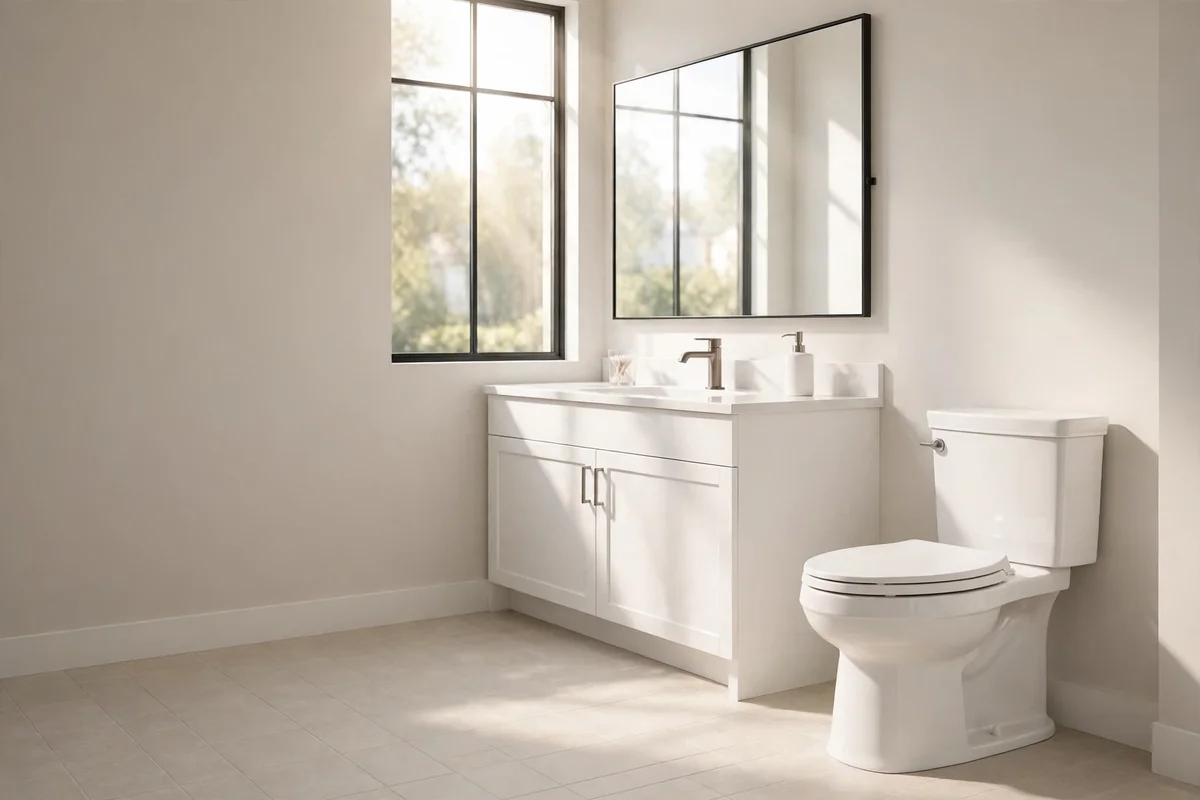
A bright, modern bathroom with a clean white toilet.
Common Toilet Problems We Help With
Clogged Toilets
Persistent or recurring blockages that a plunger will not clear, slow draining bowls and toilets that clog again after every flush.
Learn more →Running Toilets
Toilets that keep running after flushing, refill on their own, hiss from the tank or flush without anyone touching the handle.
Learn more →Toilet Leaks
Leaks around the tank, bowl, base or supply connection, including water on the floor and dampness that returns after mopping.
Learn more →Weak Flush
Toilets that struggle to clear the bowl, need two or three flushes, or leave waste behind even though the tank fills.
Learn more →Toilet Will Not Flush
Problems with the handle, chain, flapper, fill valve or flushing mechanism that leave the toilet unable to flush at all.
Learn more →Toilet Overflow
Water rising toward the rim, a bowl that threatens to spill over, and overflows that have already reached the floor.
Learn more →Toilet Repair Services in Fountain Valley
Toilet Repair
General diagnosis and repair for toilets that clog, run, leak, rock or flush poorly.
Learn more →Toilet Clog Repair
Clearing stubborn and recurring clogs in the trap, bowl and drain line.
Learn more →Running Toilet Repair
Flapper, fill valve, chain and overflow tube problems that keep a toilet running.
Learn more →Toilet Leak Repair
Tank leaks, supply line leaks and water appearing around the base of the toilet.
Learn more →Toilet Flush Repair
Weak, partial and incomplete flushes, and toilets that need repeated flushing.
Learn more →Toilet Tank Repair
Tank components that leak, refill slowly, overfill or make hissing and gurgling sounds.
Learn more →Toilet Flapper Replacement
Worn, warped or hardened flappers that let tank water seep into the bowl.
Learn more →Toilet Fill Valve Repair
Fill valves that will not shut off, refill too slowly or let the tank overfill.
Learn more →Toilet Wax Ring Repair
Failed wax seals under a rocking or leaking toilet, including flange checks.
Learn more →Toilet Base Leak Repair
Water at the base after flushing, rocking bowls and seals that have lost their grip.
Learn more →Toilet Replacement
Replacing a cracked, repeatedly failing or very old toilet with a modern efficient model.
Learn more →When a Toilet Problem Needs Professional Attention
Some toilet problems are a nuisance for an afternoon. Others are a sign that water is going where it should not go, or that a drain problem is developing below the floor. The difference matters, because a small leak at the base can soak a subfloor for weeks before the floor feels soft, and a clog that keeps returning can point to a partial blockage further down the line rather than to anything wrong with the toilet itself. Knowing which signs call for a closer look helps Fountain Valley homeowners act early, when the work is usually simpler.
Repeated clogs are one of the clearest signals. A toilet that clogs once after too much paper is ordinary. A toilet that clogs every week, clogs in more than one bathroom, or clogs even with normal use is describing a different problem. It may have an object caught in the trap, a partial blockage in the drain, a blocked vent, or an older low-flow bowl that no longer flushes with enough force. Plunging clears the symptom for a day and the clog returns, because the underlying restriction is still there.
Water around the base of the toilet deserves attention the first time it appears. If water shows up only after a flush, the wax seal between the toilet and the floor flange is a likely cause. If it is there all the time, the supply line or the shutoff valve behind the toilet should be checked first. Either way, water on the floor is not a cosmetic problem. It can reach the subfloor, loosen flooring, encourage damp and mould growth in the floor cavity, and let sewer gas enter the home if the seal has failed. A toilet that rocks or shifts when used has usually already broken that seal, even if no water is visible yet.
A toilet that runs without stopping, refills every few minutes, or flushes by itself is wasting water around the clock. The cause is usually inside the tank: a flapper that no longer seals, a fill valve that will not shut off, a chain that is too tight, or a tank level set too high. These are common repairs, and they are worth addressing promptly rather than living with the sound and the water use. The United States Environmental Protection Agency notes that household leaks can waste 180 gallons of water per week, and toilets are often the source.
Other signs that point toward professional help include a sewage odour near the toilet, a toilet that backs up when another fixture is used, gurgling from the tub or sink when the toilet flushes, a crack in the bowl or tank, and water damage on the ceiling below an upstairs bathroom. A crack below the waterline will leak and porcelain does not heal, so a cracked toilet is a replacement question rather than a repair question. If the bowl water level drops on its own between flushes, or the toilet gurgles and flushes weakly with no clog found, the vent or the drain line may be involved. Call to describe the symptoms and discuss what type of help may be appropriate.
Simple Checks and Problems That May Need Professional Help
| Situation | What you can safely check | When to call for help |
|---|---|---|
| A single clog | Use a flange plunger with firm, steady plunges and check that only toilet paper and waste went in. | The clog returns, the plunger does not move the water, or other drains are slow too. |
| Toilet runs briefly after flushing | Listen for whether it stops within a minute and check the tank water level against the fill line. | It runs without stopping, refills every few minutes, or flushes by itself. |
| Handle feels loose | Check whether the handle moves the chain and lifts the flapper when the tank lid is off. | The handle is broken, the lever arm is bent, or the chain keeps slipping off. |
| Water on the floor | Note whether it appears after flushing or all the time, and check the supply connection for drips. | Water keeps returning, the toilet rocks, or the floor feels soft around the base. |
| Weak flush | Check the tank water level and whether the flapper lifts fully when you press the handle. | The flush stays weak after those checks, or the toilet needs several flushes every time. |
| Overflow | Turn off the shutoff valve behind the toilet clockwise and do not flush again. | Water has spread onto flooring, the bowl keeps rising, or sewage is involved. |
How Toilet Repair Works
Call and describe the problem
Explain what the toilet is doing, when it started, whether other fixtures are affected, and whether water is on the floor. That description helps the local professional understand what type of visit may be needed.
Discuss the issue
A local toilet repair professional can talk through the likely causes, what to check safely in the meantime, and whether the problem sounds urgent or can wait for a scheduled visit.
Diagnose the toilet
The toilet is inspected at the fixture: the tank parts, the flush, the base and the supply connection, and the drain behaviour if clogs or backups are involved.
Repair or replace
The worn part is replaced, the seal is reset, the clog is cleared, or the toilet is replaced when repair no longer makes sense. The toilet is then flushed and checked for leaks before the visit ends.
Why Toilet Problems Should Not Be Ignored
A toilet problem rarely stays the same size. A flapper that seeps a little today becomes a toilet that runs all night next month. A wax seal that has cracked lets a small amount of water under the toilet with every flush, and that water does its damage out of sight, in the subfloor and the floor cavity. By the time flooring feels soft or a stain appears on the ceiling below, the repair has grown from a seal replacement into floor work as well. Acting when the first sign appears is usually the simpler and less disruptive path.
Water waste is the quiet cost of a running toilet. Because the leak is inside the tank and the bowl, there is no puddle to notice, only the sound of refilling and a water bill that climbs. A toilet that refills every few minutes is moving water through the bowl continuously, day and night. Fixing the flapper or fill valve stops that flow at its source, and the household returns to normal water use without changing any habits.
Dampness around a toilet also creates conditions where mould and moisture problems develop. Bathrooms are already humid rooms, and a slow leak adds steady moisture to wood, subfloor and the underside of flooring. Ventilation helps the room, but it cannot dry out a floor cavity that is being wetted from below with every flush. A base leak that is repaired promptly removes the moisture source entirely, which is the only lasting answer.
Repeated backups carry a different concern. Wastewater that rises into a bowl or backs up from a drain is a sanitation problem, not just a plumbing inconvenience, and it should not be flushed again in the hope that it clears. If a backup involves sewage, keep people and pets away from the water, avoid using other fixtures that drain into the same line, and call for help. The same applies to a toilet that overflows onto flooring: stop the water first at the shutoff valve, then call.
Ignoring a weak flush has a slower consequence. A toilet that cannot clear the bowl properly leaves waste behind, clogs more easily, and invites repeated plunging that can stress the wax seal. In older Fountain Valley homes, where many toilets date from the 1960s and 1970s tract-building era or from early low-flow replacements in the 1990s, a weak flush is often a sign that rim jets are blocked by mineral deposits, the tank level is low, or the bowl itself has lost flushing power. Each of those has a different answer, and guessing wrong means living with the problem longer than necessary.
Toilet Repair Help in Fountain Valley, CA
Fountain Valley is a largely residential city in central Orange County, incorporated in 1957 and built out mostly in the 1960s and 1970s as single-family tract homes on generous flat lots. That housing history shapes the toilet problems local professionals see most often. Many homes still have their original bathroom layouts, with toilets that have been replaced once or twice over the decades, and the mix of older fixtures, early low-flow models from the 1990s and modern WaterSense models means no two bathrooms are quite the same age inside.
Neighbourhoods across the city share that pattern in different forms. Green Valley, the master-planned community south of Talbert Avenue and west of Brookhurst Street, has 1960s and 1970s homes arranged around interior greenbelts, with pools and clubhouses run by the neighbourhood association. The blocks around Mile Square Regional Park, between Brookhurst Street, Euclid Street, Edinger Avenue and Warner Avenue, hold similar 1960s and 1970s tract homes. Westmont, Los Caballeros, the Talbert and Garfield area near Fountain Valley High School, and the Euclid and Edinger corridor each have their own mix of single-story ranch homes, two-story tract homes, condominiums and townhomes, and rental properties throughout the city add multi-unit bathrooms to the picture.
Older homes bring specific toilet issues. Supply valves that have not been turned in years can seize or weep when they are finally moved. Wax rings under toilets that have rocked for years eventually fail. Mineral deposits from hard water build up in rim jets and on flapper seats, weakening the flush and preventing a proper seal. Early 1.6-gallon toilets from the mid-1990s, the first generation of low-flow models, often flush weakly by modern standards and clog more often than the toilets that replaced them. None of this means an older home is a problem home. It means the toilet in an older bathroom deserves the same attention as any other part of the house that has been in daily use for decades.
Rental properties and multi-unit buildings add another layer. A running toilet in a rental wastes water that the owner pays for, a clogged toilet in a ground-floor unit can be the first sign of a shared drain problem, and a leak at the base of an upstairs toilet can stain the ceiling of the unit below before anyone upstairs notices water on the floor. Property managers in Fountain Valley deal with these patterns across many units, and a clear description of which unit, which floor and which fixtures are affected helps a local professional narrow down the cause before arriving.
The local climate plays a smaller but real role. Fountain Valley sits a few miles inland from Huntington Beach, with the San Diego Freeway, Interstate 405, running diagonally through the city. Summers are warm and dry, winters are mild, and the hard water that is common across Orange County leaves mineral scale inside tanks and bowls over time. That scale is one reason a toilet that flushed well for years can gradually lose power, and why a flapper that sealed cleanly when new can start to seep as deposits build up on the seat it rests on.
Service Area Around Fountain Valley
Fountain Valley Toilet Repair Pros focuses on Fountain Valley itself, including Green Valley, Westmont, Los Caballeros, the Mile Square Park area, Central Fountain Valley, the Talbert and Garfield neighbourhoods, and the Euclid and Edinger corridor. The city covers about nine square miles, with ZIP codes 92708 and 92728, and its flat street grid makes most addresses straightforward to reach from anywhere in the city.
Help is also available for toilet problems in the nearby Orange County communities that surround Fountain Valley. Huntington Beach lies to the south and west, Westminster and Garden Grove to the north, Santa Ana to the northeast, Costa Mesa to the southeast, and Seal Beach and Newport Beach a short drive further on. Many households in these neighbouring cities have the same housing patterns as Fountain Valley, with 1960s and 1970s tract homes, condominiums and rental properties, and the same toilet problems appear in all of them. The service areas page lists each nearby community and the help available there.
When you call, it helps to have the property address, the number of bathrooms affected, and a short description of the problem ready. If the problem is in a rental or a multi-unit building, note which unit and which floor the toilet is on, and whether other units have reported similar problems. That information helps the local professional decide what to bring and what questions to ask first.
Is Your Toilet Problem Urgent?
- Water is flowing from the toilet and you cannot stop it at the shutoff valve behind the toilet.
- The toilet has overflowed and water is spreading across the bathroom floor.
- Sewage is backing up into the toilet, tub or shower.
- Water is coming through the ceiling below an upstairs bathroom.
- The toilet is the only working toilet in the home and it will not flush at all.
- A strong sewage odour has appeared suddenly near the toilet or a drain.
- The floor around the toilet feels soft, spongy or visibly raised.
Toilet Repair Questions, Answered Briefly
The questions below are answered in detail in the FAQ section of this page and on the dedicated FAQ page. The short version is this: most toilet problems are repairs, not replacements, and most repairs involve a small number of parts inside the tank or a seal under the toilet. A toilet that runs usually has a flapper or fill valve problem. A toilet that clogs repeatedly usually has a restriction in the trap or the drain line. A toilet that leaks at the base usually has a failed wax ring or a damaged flange. And a toilet that is cracked, rocks after a new seal, or needs a new part every few months is usually a replacement candidate.
If you are unsure which of those describes your toilet, the most useful thing you can do is describe what you see and hear. Does the toilet run, hiss, gurgle or refill on its own? Does water appear on the floor, and if so, when? Does the bowl drain slowly, rise when flushed, or stay at the same level? Does the problem affect one toilet or every toilet in the home? Those observations point a local professional toward the cause faster than any guess about parts, and they are the same details that help you decide whether the problem can wait or needs prompt attention.
For a toilet that is overflowing right now, the first step is always the same: turn off the shutoff valve behind the toilet by turning it clockwise, do not flush again, and mop up water that has reached the floor. Then call. The overflow guidance on the toilet problems page walks through those steps in order, including what to do if the valve is stuck or missing.
Call for Toilet Repair Help in Fountain Valley
Need help with a clogged, running, leaking or overflowing toilet in Fountain Valley? Call now to describe the problem and connect with a local toilet repair professional who can discuss the help available for your home.
Fountain Valley Toilet Repair Pros is a referral service connecting customers with local toilet repair professionals; it is not itself the service company.
Frequently Asked Questions
How much does toilet repair cost in Fountain Valley?
Repair costs vary depending on the type of problem, the parts required, how accessible the toilet and its connections are, and whether repair or replacement is the right answer. A flapper replacement and a toilet reset on a new wax ring are very different jobs. Call to describe the problem and discuss the information available for your specific toilet.
Why does my toilet keep running after I flush?
The most common cause is a flapper that no longer seals, so water seeps from the tank into the bowl and the fill valve keeps topping the tank up. A fill valve that will not shut off, a chain that is too tight, or a tank water level set too high can cause the same symptom. The running toilet repair page explains how each cause is identified.
Why does my toilet clog over and over again?
Recurring clogs often mean something is caught in the trap, a partial blockage sits further down the drain line, the vent is blocked, or an older low-flow toilet no longer flushes with enough force. Wipes sold as flushable and too much paper also contribute, because they do not break apart the way toilet paper does. If plunging only helps for a day, the restriction is probably still there.
Why is water leaking around the base of my toilet?
Water that appears after flushing usually points to the wax ring seal under the toilet or the floor flange it sits on. Water that is there all the time more often comes from the supply line or the shutoff valve. A rocking toilet has usually already broken the wax seal. The leak should be assessed promptly, because water under the toilet can damage the subfloor out of sight.
How do I stop a toilet from overflowing?
Turn off the shutoff valve behind the toilet by turning it clockwise, and do not flush again. Lift the tank lid carefully and push the flapper down if water is still flowing into the bowl. Mop up water on the floor, keep people away from any water that may contain waste, and call for help if the bowl keeps rising or sewage is involved.
Should I repair my toilet or replace it?
Repair usually makes sense when the porcelain is sound and the problem is a single worn part, such as a flapper, fill valve, handle or wax ring. Replacement is usually the better answer when the bowl or tank is cracked, the base keeps leaking after a new seal, the toilet needs a new part every few months, or it is a pre-1994 model using far more water per flush than a modern WaterSense model.
Can a running toilet waste a lot of water?
Yes. A toilet that runs without stopping moves water through the bowl continuously, and a toilet that refills every few minutes is doing the same thing in smaller bursts. The United States Environmental Protection Agency notes that household leaks can waste 180 gallons of water per week, and toilets are often the source. The waste stops when the flapper or fill valve is fixed.
What causes a weak toilet flush?
Common causes include a low tank water level, a chain with too much slack so the flapper closes early, mineral deposits blocking the rim jets under the bowl rim, a refill tube that is not directing water into the overflow tube, and a partial clog in the trap. Each cause has a different fix, which is why a weak flush is worth diagnosing rather than guessing at.
Can a toilet leak damage the floor?
Yes. A slow leak at the base puts a small amount of water under the toilet with every flush, and that water soaks into the subfloor and the floor cavity where it cannot be seen. Over weeks it can soften flooring, loosen tiles and encourage damp and mould growth. A stain on the ceiling below an upstairs bathroom is often the first visible sign.
When should I call a professional for a toilet problem?
Call when clogs keep returning, water appears around the base, the toilet runs without stopping, sewage backs up, the toilet overflows, the bowl or tank is cracked, or the floor around the toilet feels soft. Also call when more than one fixture is affected, since that points to a drain or vent problem rather than a single toilet.
Need Toilet Repair? Call Now
Describe the toilet problem and discuss the help available for your specific situation.