Frequently Asked Questions About Toilet Repair in Fountain Valley, CA
These are the questions Fountain Valley homeowners ask most often about toilet repair, grouped by topic. Each answer is short and direct, and the dedicated service pages cover each topic in full. If your question is not answered here, call and describe the problem, and a local toilet repair professional can discuss it with you.
Toilet repair assistance for homes, rentals, and local properties.
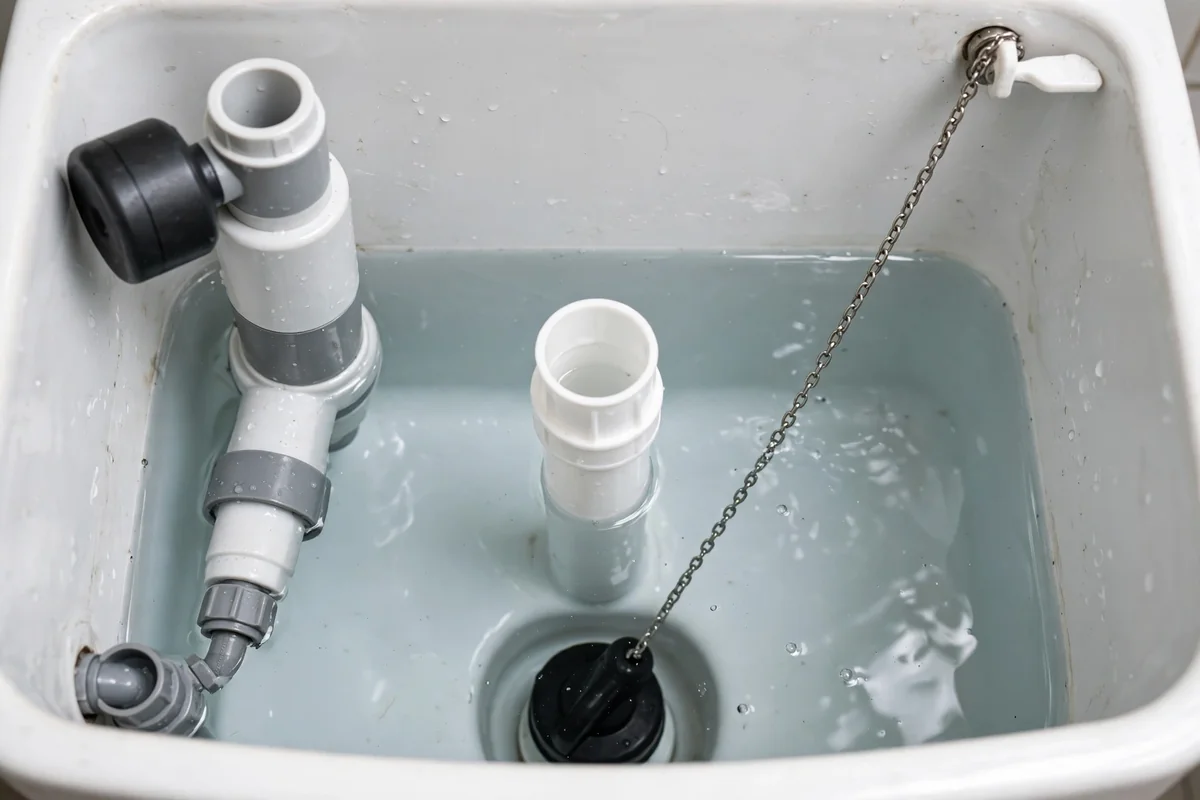
A close look inside a toilet tank at the fill valve, flapper and chain.
Costs and Calling for Help
The question every homeowner asks first is about cost, and the honest answer is that repair costs vary depending on the type of problem, the parts required, how accessible the toilet and its connections are, and whether repair or replacement is the right answer. A flapper replacement and a toilet reset on a new wax ring are very different jobs, and a toilet that needs to be lifted for a flange inspection is a different job again. Call to describe the problem and discuss the information available for your specific toilet, rather than relying on a figure that was quoted for a different problem in a different home.
When you call, have the address, which bathroom and toilet is affected, a short description of the symptoms, when the problem started, and whether other fixtures are affected. Note whether water is on the floor and whether the toilet is the only working toilet in the home. Those details help the local professional understand what type of visit may be needed. The contact page explains the calling process in full, including what happens after you call and what information to have ready.
Fountain Valley Toilet Repair Pros is a referral service connecting customers with local toilet repair professionals; it is not itself the service company. That means your call connects you with a local professional who can assess the problem, explain the options and carry out the repair or replacement. The about page explains how the referral service works, what it does and what it does not do, and why there is no form to fill in.
Running Toilets and Water Waste
A toilet that runs is almost always a tank problem, and the flapper is the most common cause. The flapper is a rubber seal that sits in water all day, and over years it hardens, warps and collects mineral deposits on its seat. Once it stops sealing cleanly, tank water seeps into the bowl, the tank level drops, and the fill valve tops it up again. That cycle repeats for as long as the flapper leaks. A fill valve that will not shut off, a chain that is too tight, or a tank level set too high can cause the same symptom, and the dye test distinguishes between them. Add food colouring to the tank, wait fifteen minutes without flushing, and check the bowl: colour in the bowl means water is leaking past the flapper.
A running toilet wastes water continuously, because the water moves from the tank into the bowl and down the drain without ever being used. The United States Environmental Protection Agency notes that household leaks can waste 180 gallons of water per week, and toilets are often the source. Fixing the flapper or fill valve stops the waste at its source. The running toilet repair page covers each cause in detail, including the chain slack, the overflow tube and the fill valve adjustments that are so often the culprit after a repair.
Clogs, Flushes and Overflows
A single clog after too much paper is ordinary and usually clears with a flange plunger. A clog that returns every week usually means something is caught in the trap, a partial blockage sits further down the drain line, the vent is blocked, or an older low-flow toilet no longer flushes with enough force. Wipes sold as flushable are a frequent contributor, because they do not break apart in water the way toilet paper does. If the tub gurgles or backs up when the toilet flushes, the problem is in a shared drain line rather than in the toilet alone, and plunging will not fix it for long.
A weak flush has its own causes: a low tank water level, a chain with too much slack so the flapper closes early, mineral deposits blocking the rim jets under the bowl rim, a refill tube that is not directing water into the overflow tube, and a partial clog in the trap. Check the tank water level first, because it should sit about half an inch to three quarters of an inch below the top of the overflow tube. If the flush stays weak after those checks, the toilet deserves a proper diagnosis rather than another round of guessing.
For an overflow, the first step is always the same: turn off the shutoff valve behind the toilet by turning it clockwise, and do not flush again. Lift the tank lid carefully and push the flapper down if water is still flowing into the bowl. Mop up water on the floor, keep people away from any water that may contain waste, and call for help if the bowl keeps rising or sewage is involved. The toilet problems page walks through those steps in order.
Leaks, Replacement and Prevention
Water at the base of a toilet after flushing usually points to the wax ring seal under the toilet or the floor flange it sits on. Water that is there all the time more often comes from the supply line or the shutoff valve. A rocking toilet has usually already broken the wax seal, even if no water is visible yet. A base leak should be assessed promptly, because water under the toilet damages the subfloor out of sight. The toilet leak repair page covers each leak location in detail, with a table for finding the source from where and when the water appears.
Replacement is the sensible answer when the bowl or tank is cracked, the base keeps leaking after a new seal, the toilet needs a new part every few months, it clogs with normal use even when the drain is clear, or it is a pre-1994 model using far more water per flush than a modern WaterSense model. Repair is usually better when the porcelain is sound and the problem is a single worn part. The toilet replacement page explains the decision, the rough-in measurements, and what a replacement visit involves.
Prevention is mostly a matter of habits and attention. Flush only toilet paper and waste. Do not flush wipes, paper towels, cotton products or feminine hygiene products. Listen for a toilet that runs or refills on its own, and do the dye test when you hear it. Check around the base of the toilet for dampness or a rocking bowl when you clean the bathroom. Turn the shutoff valve gently once in a while so it does not seize. Those small habits catch most toilet problems early, when the work is usually simpler.
Questions About Toilets in Older Homes
Older homes raise questions that newer homes do not, and Fountain Valley has many of them. The most common is whether a toilet that has been in service for twenty or thirty years is worth repairing, or whether it should be replaced. The answer depends on the porcelain, the pattern of failures, and the water use, not on the age alone. A toilet that is twenty years old, flushes well, does not leak, and has had its tank parts replaced when they wore out is a sound toilet. A toilet that is ten years old, cracked, rocking and clogging is not. Age matters only in combination with the symptoms, and a local professional can look at the toilet, the symptoms and the age together and explain which side of the line a particular toilet falls on.
Another common question is whether the parts for an older toilet are still available. In most cases they are, because flappers, fill valves, handles and wax rings are made in standard sizes that fit a wide range of models, and a local professional who sees the mix of toilets across Fountain Valley regularly can usually identify the right parts from the symptom and the model. The exception is a toilet with an unusual rough-in, a 10-inch or 14-inch drain position, or a model whose parts were specific to that manufacturer. In those cases the part may need to be ordered, or the toilet may be a better candidate for replacement than for repair. Noting the make and model, usually marked inside the tank or on the lid, helps the professional identify the right parts before the visit.
A third question is whether a toilet problem in an older home is a sign of a larger plumbing problem. Sometimes it is, and sometimes it is not. A single toilet that runs is usually a tank problem in that toilet alone. A toilet that clogs at the same time as the tub drains slowly is usually a drain problem that affects the whole bathroom. A toilet that backs up when another fixture is used is usually a shared drain problem. The pattern, whether one fixture or several are affected, is the clue, and it is the first thing a local professional asks about when you call. If more than one fixture is affected, say so, because it changes the visit from a toilet repair to a drain check.
The last question older-home owners ask is about prevention: what can be done to keep a toilet working well for longer. The habits are simple. Flush only toilet paper and waste. Listen for a toilet that runs or refills on its own, and do the dye test when you hear it. Check around the base of the toilet for dampness or a rocking bowl when you clean the bathroom. Turn the shutoff valve gently once in a while so it does not seize. Replace a flapper when it hardens, rather than waiting for the toilet to run. Those small habits catch most toilet problems early, when the work is usually simpler, and they are the same habits that keep a newer toilet working well for years.
Still Have a Question? Call for Help
If your question is not answered here, call now to describe your toilet problem and connect with a local toilet repair professional who can discuss it with you.
Fountain Valley Toilet Repair Pros is a referral service connecting customers with local toilet repair professionals; it is not itself the service company.
Frequently Asked Questions
How much will my toilet repair cost?
Costs vary depending on the type of problem, the parts required, how accessible the toilet and its connections are, and whether repair or replacement is the right answer. A flapper replacement and a toilet reset on a new wax ring are very different jobs. Call to describe the problem and discuss the information available for your specific toilet.
What is the fastest way to get toilet repair help in Fountain Valley?
Call and describe the problem. Have the address, which bathroom and toilet is affected, and a short description of the symptoms ready. A local toilet repair professional can talk through the likely causes and what type of help may be appropriate. The contact page explains the calling process.
Why is my toilet running constantly?
A toilet that runs constantly usually has a flapper that no longer seals, so water seeps into the bowl and the fill valve keeps topping the tank up. A fill valve that will not shut off, a chain that is too tight, or a tank level set too high can cause the same symptom. The dye test shows whether the leak is past the flapper.
Why does my toilet keep clogging?
Recurring clogs often mean something is caught in the trap, a partial blockage sits further down the drain line, the vent is blocked, or an older low-flow toilet no longer flushes with enough force. Wipes and too much paper make it worse. If plunging only helps for a day, the restriction is still there.
What causes water around the base of the toilet?
Water that appears after flushing usually points to the wax ring seal under the toilet or the floor flange. Water that is there all the time more often comes from the supply line or the shutoff valve. A rocking toilet has usually already broken the wax seal, and the leak should be assessed promptly.
How do I stop my toilet overflowing?
Turn off the shutoff valve behind the toilet by turning it clockwise, and do not flush again. Lift the tank lid carefully and push the flapper down if water is still flowing into the bowl. Mop up water on the floor and call for help if the bowl keeps rising or sewage is involved.
When should I replace my toilet instead of repairing it?
Replace it when the bowl or tank is cracked, the base keeps leaking after a new seal, it needs a new part every few months, it clogs with normal use even when the drain is clear, or it is a pre-1994 model using far more water per flush than a modern WaterSense model. Repair it when the porcelain is sound and the problem is a single worn part.
Can a running toilet really waste much water?
Yes. A toilet that runs without stopping moves water through the bowl continuously, and one that refills every few minutes wastes water in small bursts all day. The United States Environmental Protection Agency notes that household leaks can waste 180 gallons of water per week, and toilets are often the source.
Why is my toilet flushing weakly?
Common causes include a low tank water level, a chain with too much slack so the flapper closes early, mineral deposits blocking the rim jets under the bowl rim, a refill tube that is not directing water into the overflow tube, and a partial clog in the trap. Each cause has a different fix.
Can a leaking toilet damage my floor?
Yes. A slow leak at the base puts a small amount of water under the toilet with every flush, and that water soaks into the subfloor and the floor cavity where it cannot be seen. Over weeks it can soften flooring, loosen tiles and encourage damp and mould growth. A stain on the ceiling below is often the first visible sign.
What should I do if sewage backs up into my toilet?
Do not flush again, and keep people and pets away from the water. Avoid using other fixtures that drain into the same line, because they can make the backup worse. Turn off the shutoff valve if water is rising, and call for prompt help, because a sewage backup is a sanitation problem as well as a plumbing problem.
Are wipes labelled flushable safe for my toilet?
No. Wipes sold as flushable do not break apart in water the way toilet paper does. They snag in the trap and in the drain line, catch paper behind them, and build up into a blockage over weeks. They are one of the most common causes of recurring toilet clogs, and they should go in the bin.
Need Toilet Repair? Call Now
Describe the toilet problem and discuss the help available for your specific situation.