Clogged Toilet Repair in Fountain Valley, CA
A clogged toilet is a blockage in the toilet trap, the bowl outlet or the drain line that prevents the bowl emptying properly. A single clog after too much paper is ordinary and often clears with a plunger. A clog that returns every week, a toilet that drains slowly even when it does not clog, or a clog that affects more than one fixture usually means the blockage is deeper than the bowl, and plunging alone will not fix it.
Toilet repair assistance for homes, rentals, and local properties.
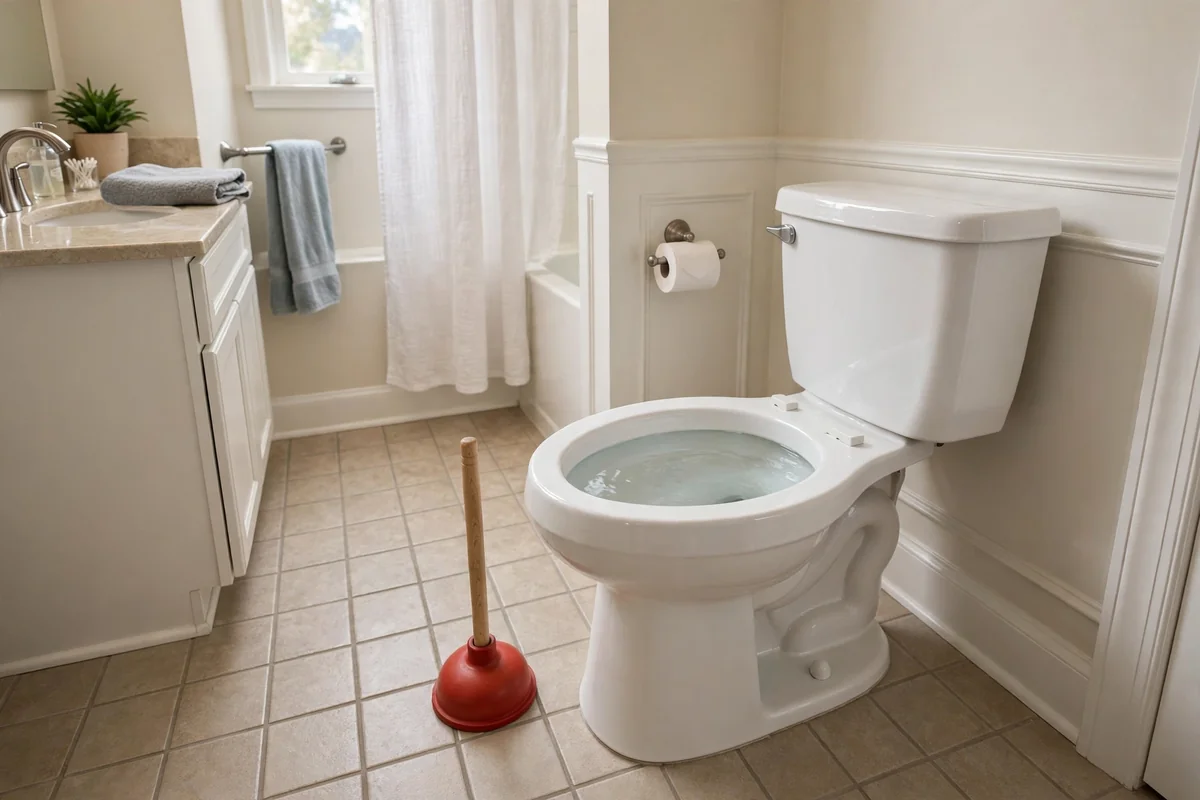
A clogged toilet with the water level high in the bowl and a plunger nearby.
What a Clogged Toilet Is Telling You
A toilet clog is not one problem but several, and the behaviour of the bowl usually gives the cause away. If the bowl fills, swirls weakly and drains slowly, water is getting past a partial blockage. If the bowl fills and stays full, the blockage is more complete. If the bowl drains normally most of the time but clogs every week, something inside the trap is catching paper a little more with every flush. And if the toilet clogs at the same time as the tub drains slowly or gurgles, the blockage is in a shared drain line rather than in the toilet at all. Each of those patterns has a different answer, which is why the first question a local professional asks is usually about the pattern, not the plunger.
The trapway is the S-shaped passage cast into the base of the toilet. It holds water to block sewer gas from entering the home, and it is also the narrowest part of the path waste must travel. Anything that does not belong in a toilet, a toy, a comb, a cotton swab, a wipe, can lodge in the curve of the trapway and sit there for months, letting water past while catching paper. The plunger pushes water through and the toilet works again for a day or two, then the paper builds up on the trapped object and the clog returns. That cycle is the clearest sign that something is stuck inside the toilet rather than in the drain beyond it.
Further down the line, a partial blockage in the drain pipe behaves differently. It may not affect the toilet at all on a light flush, but it slows the drain when the toilet sends a full bowl of water at once, because the toilet moves more water in a few seconds than any other fixture in the home. That is why the toilet is often the first fixture to show a drain problem, even when the blockage is well beyond the bathroom. Tree roots, a sagging or damaged section of pipe, and years of buildup can all narrow a drain line gradually, so the toilet clogs more and more often over months without any single event to blame.
The vent is the third possibility, and it is the one most often missed. Every drain needs air behind the water, supplied through a vent pipe that usually exits through the roof. If leaves, a nest or debris block the vent, the toilet flushes weakly, gurgles, and clogs more often, even though there is no blockage in the drain itself. The bowl may also lose water level between flushes. A vent problem is not something to investigate from inside the bathroom, and it is one of the reasons a recurring clog deserves a proper diagnosis rather than repeated plunging.
Common Causes of a Clogged Toilet
| Cause | Typical pattern | What usually helps |
|---|---|---|
| Too much toilet paper | Single clog, clears with a plunger, does not return. | Less paper per flush, and a second flush halfway through if needed. |
| Wipes sold as flushable | Clogs return every week or two, worse over time. | Stop flushing wipes entirely; the blockage may need an auger or drain clearing. |
| Object caught in the trap | Water passes, paper catches, clog returns after every clearing. | A closet auger can hook the object, or the toilet may need to be lifted. |
| Partial drain blockage | Toilet is slow, other drains are slow or gurgling too. | Drain clearing beyond the toilet, and a check for roots or pipe damage. |
| Blocked vent | Weak flush, gurgling, bowl water level drops, no clog found. | Clearing the vent, which is work for a professional. |
| Early low-flow toilet | Toilet from the mid-1990s clogs often with normal use. | Cleaning rim jets and checking the flush, or replacing the toilet. |
| Mineral buildup in rim jets | Flush grows weaker over years, bowl does not clear fully. | Cleaning the rim jets and checking the tank water level. |
What to Try Safely Before You Call
Stop flushing
Do not flush again while the bowl is full. A second flush adds more water to a bowl that cannot drain, and that is how a clog becomes an overflow.
Use a flange plunger
Use a flange plunger, the type with a narrow cup that seals into the bowl outlet, not a flat sink plunger. Make sure there is enough water in the bowl to cover the cup, press down firmly to create a seal, and plunge with steady, even strokes.
Wait and watch
If the water level drops and the bowl drains, flush once and watch it clear fully. If the water does not move after several minutes of plunging, stop and call for help rather than forcing the issue.
Check other fixtures
Run a tap or check whether the tub drains slowly or gurgles when the toilet is flushed. If other fixtures are affected, the problem is in a shared line and the toilet alone is not the cause.
What Not to Put Down a Toilet
- Wipes of any kind, including wipes sold as flushable, which do not break apart in water the way toilet paper does.
- Paper towels, tissues and napkins, which are made to stay strong when wet and do not dissolve like toilet paper.
- Cotton balls, cotton swabs and cotton pads, which snag in the trap and catch paper behind them.
- Dental floss, hair and bandages, which tangle and build up in the drain line over time.
- Feminine hygiene products, which expand in water and are a common cause of stubborn blockages.
- Cooking grease and food waste, which solidify in pipes and narrow the drain.
- Cat litter, including litter sold as flushable, which clumps and settles in pipes.
- Medicines, chemicals and paint, which do not belong in a drain and can damage plumbing and the wider sewer system.
Why Chemical Drain Cleaners Are a Poor Answer for Toilets
Chemical drain cleaners are made for sinks and tubs, not toilets, and they cause more problems than they solve in a toilet. The chemicals sit in the bowl and trap without reaching the blockage, they can damage the wax ring seal under the toilet, and they create a hazard for anyone who later plunges or augers the toilet, because the chemicals splash back. They also do nothing for the most common causes of a recurring clog: an object in the trap, a partial blockage further down the line, or a blocked vent. A flange plunger and, when needed, a closet auger are the right tools for a toilet, and a professional can use them without risking the seal or the porcelain.
A closet auger, sometimes called a toilet auger, is the short snake with a bent end and a protective sleeve that is designed for toilets. It reaches into the trapway and can hook or break up a blockage that a plunger cannot move, without scratching the porcelain the way a standard bare metal drain snake would. It is a useful tool in experienced hands, but it is not a substitute for a diagnosis. If the auger clears the trap and the toilet clogs again within days, the blockage is further down the line or the toilet itself is flushing too weakly, and the next step is a drain check rather than another pass with the auger.
One habit that helps a weak toilet more than most people expect is flushing twice when needed, once halfway through, rather than trying to clear everything in a single flush. That is not a fix for a clog, but it reduces the load on a toilet whose flush has weakened with age or mineral buildup. It is a holding measure, not a solution, and if the toilet needs two flushes every time, the flush itself deserves attention. The toilet problems page explains weak flushes in detail, and the toilet replacement page covers the point at which an older toilet that clogs with normal use is better replaced than repaired again.
Clogged Toilets in Fountain Valley Homes
Fountain Valley housing shapes the clogged toilet problems local professionals see. Many homes were built in the 1960s and 1970s, and their drain lines have been in service for decades. A drain line that has narrowed gradually through buildup, or a section that has sagged with soil movement over the years, will show up first as a toilet that clogs more often, because the toilet sends the largest single volume of water through the line. Homes in Green Valley, Westmont, Los Caballeros and the neighbourhoods around Mile Square Regional Park share that era of construction, and many have had only one bathroom updated at a time, so the age of the toilet and the age of the drain do not always match.
The early low-flow toilets installed in many Fountain Valley homes in the 1990s are another local pattern. Those first 1.6-gallon models often did not flush with enough force, and some still clog every week with normal use even though nothing is wrong with the drain. If the rim jets are clean, the tank level is correct and the toilet still clogs, the bowl itself is the limitation, and a modern WaterSense toilet that flushes at 1.28 gallons per flush will usually clear the bowl far more reliably than the 1990s model it replaces. The toilet replacement page explains how that decision is made and what a replacement involves.
Rental properties add a further wrinkle. In a rental, a clogged toilet may be reported by a tenant who does not know what went down the toilet, and the same toilet may have been plunged many times before anyone reports it. In a multi-unit building, a clog that affects more than one unit is almost always a shared drain problem rather than a single toilet. When you call about a clogged toilet in a rental or a multi-unit property, note which unit and floor it is on, whether other units are affected, and whether the tub or sink in the same bathroom is slow. Those details help a local professional decide whether the visit should focus on the toilet or on the drain line beyond it.
When a Clogged Toilet Needs Prompt Help
- The bowl is full and rising, or water has already reached the floor.
- Sewage is backing up into the toilet, tub or shower.
- More than one fixture is slow, gurgling or backing up at the same time.
- The toilet is the only working toilet in the home and it will not drain.
- The clog returns within days of every clearing, with normal use.
- You can see or suspect an object in the toilet that a plunger cannot move.
Why Some Toilets Clog More Than Others
Not all toilets clog equally, and the differences are usually in the bowl rather than in the household. The trapway, the curved passage cast into the base of the toilet, varies in size and smoothness from one model to another. A toilet with a larger, fully glazed trapway lets waste pass more easily than one with a narrow or roughly finished trapway, and that difference shows up as a toilet that rarely clogs beside a toilet in the next bathroom that clogs every week. The glaze matters because a smooth surface lets paper slide through, while a rough surface catches it. That is why two toilets in the same house, used by the same people, can behave very differently, and why a toilet that has always clogged more than the others is probably describing its own design rather than anything the household is doing wrong.
The age of the toilet is the second factor. Early low-flow toilets from the mid-1990s were the first generation built to the 1.6-gallon federal standard, and many of them flush weakly by modern standards. They use less water than the toilets they replaced, but the bowl and trapway design had not yet caught up with the lower volume, so they clog more often with normal use. Modern WaterSense toilets, which flush at 1.28 gallons per flush, are designed around that lower volume, with larger trapways and bowl shapes that clear waste reliably. If a toilet from the 1990s clogs every week even when the drain is clear and the rim jets are clean, the bowl itself is the limitation, and no amount of plunging will change that. The toilet replacement page explains how that decision is made.
Household habits are the third factor, and they are the one the household can change. The amount of paper used per flush matters more than most people realise, because a toilet is designed to clear a certain volume in a single flush, and exceeding that volume regularly will clog even a sound toilet. Flushing twice when needed, once halfway through, helps a weak toilet more than any other simple habit, though it is a holding measure rather than a fix. Wipes are the habit that causes the most damage, because they do not break apart in water the way toilet paper does, and they snag in the trap and in the drain line, building up into a blockage over weeks. Children add another factor: a toy, a comb or a small object dropped into the bowl and flushed can lodge in the trapway and sit there for months, catching paper a little more with every flush, until the toilet clogs every week and nobody knows why.
Guests and gatherings are a fourth factor that catches Fountain Valley homeowners by surprise. A toilet that copes with a household of two or three can clog repeatedly when the house is full for a holiday or a family visit, because it is being flushed far more often, with more paper, by people who do not know its quirks. That pattern does not mean the toilet is failing. It means the toilet is being asked to do more than usual, and the answer is usually to flush twice when needed and to keep wipes and other products out of the bowl. If the toilet clogs just as often when the house is back to normal, the cause is in the toilet or the drain rather than in the number of people using it, and it deserves a proper diagnosis.
The drain line beyond the toilet is the last factor, and it is the one that is hardest to see. A drain line that has narrowed gradually through buildup, or a section that has sagged with soil movement over the years, will show up first as a toilet that clogs more often, because the toilet sends the largest single volume of water through the line. Tree roots can enter a drain line through a joint or a crack, and they catch paper and build up into a blockage over months. A blocked vent on the roof can also make a toilet flush weakly and clog more often, because the drain needs air behind the water to flow properly. If the tub gurgles or backs up when the toilet flushes, or more than one fixture is slow at the same time, the problem is in a shared line and the toilet alone is not the cause.
Call for Clogged Toilet Repair in Fountain Valley
A clog that keeps coming back is describing a problem a plunger cannot reach. Call now to describe the pattern and connect with a local toilet repair professional who can discuss the help available.
Fountain Valley Toilet Repair Pros is a referral service connecting customers with local toilet repair professionals; it is not itself the service company.
Frequently Asked Questions
Why does my toilet clog every week?
A toilet that clogs every week usually has something caught in the trap, a partial blockage further down the drain line, a blocked vent, or an older low-flow bowl that no longer flushes with enough force. Wipes and too much paper make it worse. If plunging only helps for a day, the restriction is still there and needs a proper diagnosis.
What is the right way to plunge a toilet?
Use a flange plunger, the type with a narrow cup that seals into the bowl outlet. Make sure the cup is covered with water, press down firmly to create a seal, and plunge with steady, even strokes. Do not flush again while the bowl is full, and stop if the water does not move after several minutes.
Can I use a drain snake in my toilet?
Do not use a standard bare metal drain snake in a toilet, because it can scratch the porcelain. A closet auger, the short snake with a bent end and a protective sleeve, is designed for toilets and can reach into the trapway. If the auger clears the trap and the clog returns within days, the blockage is further down the line.
Are flushable wipes really safe to flush?
No. Wipes sold as flushable do not break apart in water the way toilet paper does. They snag in the trap and in the drain line, catch paper behind them, and build up into a blockage over weeks. They are one of the most common causes of recurring toilet clogs, and they should go in the bin, not the toilet.
Why does my toilet clog when other drains are slow too?
When the toilet clogs at the same time as the tub drains slowly or gurgles, the blockage is in a shared drain line rather than in the toilet. The toilet is usually the first fixture to show a drain problem because it sends the most water at once. That pattern needs a drain check rather than another round of plunging.
What should I do if the toilet bowl keeps rising?
Do not flush again. Turn off the shutoff valve behind the toilet by turning it clockwise, and lift the tank lid carefully to push the flapper down if water is still flowing into the bowl. Mop up any water on the floor and call for help, especially if sewage is involved or water is spreading.
Why does my toilet clog even though I only flush toilet paper?
Too much paper in one flush can clog any toilet, but a toilet that clogs with a normal amount of paper usually has another cause: an object in the trap, mineral buildup narrowing the rim jets, a low tank water level weakening the flush, or a partial blockage in the drain. The pattern, how often it happens and whether other fixtures are affected, points to the cause.
Can a blocked vent cause a toilet to clog?
Yes. Every drain needs air behind the water, supplied through a vent pipe that usually exits through the roof. If the vent is blocked by leaves, a nest or debris, the toilet flushes weakly, gurgles and clogs more often, and the bowl water level may drop between flushes. Clearing a vent is work for a professional.
Should I replace a toilet that clogs all the time?
It depends on the cause. If an object is in the trap or the drain line is partly blocked, clearing that fixes the problem and the toilet can stay. If the toilet is an early low-flow model that clogs with normal use even when the drain is clear, replacement with a modern WaterSense model is often the sensible answer.
What does a closet auger do that a plunger cannot?
A closet auger reaches into the curved trapway inside the toilet and can hook or break up a blockage that sits beyond the reach of a plunger, including an object caught in the trap. It is designed with a protective sleeve so it does not scratch the porcelain. It cannot clear a blockage further down the drain line or fix a blocked vent.
Need Toilet Repair? Call Now
Describe the toilet problem and discuss the help available for your specific situation.