Toilet Leak Repair in Fountain Valley, CA
A toilet leak is water escaping from the tank, the bowl, the supply connection or the seal under the toilet. Where the water appears, and when it appears, usually identifies the cause. Water that shows up only after flushing points to the seal under the toilet. Water that is there all the time points to the supply line or the tank. A leak at the base should be assessed promptly, because water under the toilet can damage the subfloor out of sight.
Toilet repair assistance for homes, rentals, and local properties.
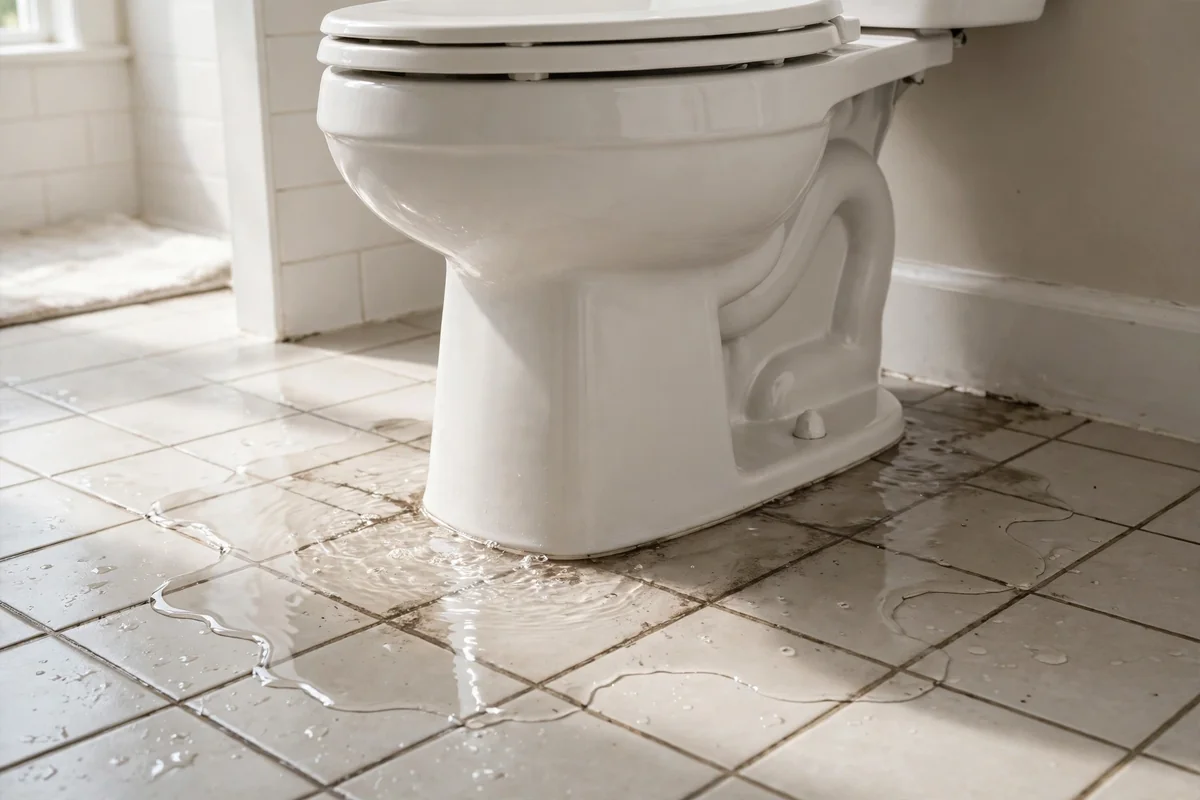
Water pooling at the base of a toilet on the bathroom floor.
Where Toilet Leaks Start
A toilet has four places where water can escape, and each one behaves differently. The tank can leak into the bowl, through its bolts and gaskets, or through a crack in the porcelain. The supply line and shutoff valve behind the toilet can drip, weep or fail suddenly. The bowl can leak at the base where it meets the floor. And condensation on the outside of the tank can look like a leak while being something else entirely. Sorting out which of those is happening is the first step in any leak repair, and it is mostly a matter of watching when the water appears and where it comes from.
Tank leaks into the bowl are the quietest kind. Water seeps past the flapper or the flush valve, the tank level drops, and the fill valve tops it up. There is no water on the floor, only the sound of a toilet that runs or refills on its own. Tank leaks onto the floor are different: they come from the bolts that hold the tank to the bowl, the gasket between tank and bowl, or a crack in the tank. A crack in the tank is a replacement question, not a repair question, because porcelain under constant water pressure does not hold a patch reliably. The running toilet repair page covers tank leaks into the bowl in detail.
Supply leaks are the most visible kind, and the easiest to spot early. The braided supply line that feeds the tank, and the shutoff valve it connects to, sit behind the toilet where they are easy to overlook and hard to reach. A supply line with a bulge, a corroded nut, or a slow drip at either end is a warning that it may fail. A shutoff valve that has not been turned in years can seize, weep when it is finally moved, or fail to close when you need it most. These parts are inexpensive and straightforward to replace, and they are worth checking whenever the toilet is being worked on for another reason.
Base leaks are the ones that cause the most damage, because the water goes under the toilet rather than onto the floor where it can be seen. The wax ring is a ring of wax that seals the toilet to the floor flange, the fitting that connects the toilet to the drain. When the wax ring fails, water escapes under the toilet with every flush. It soaks into the subfloor, loosens flooring, and can let sewer gas into the home. A toilet that rocks has usually already broken its wax seal, even if no water is visible yet, because the wax ring is not designed to flex. Every movement of the toilet compresses the seal a little more until it fails.
Finding the Source of a Toilet Leak
| Where the water appears | When it appears | Most likely source |
|---|---|---|
| In the bowl, without flushing | All the time, with a running or refilling toilet | Flapper or flush valve leaking tank water into the bowl. |
| On the floor behind the toilet | All the time, or after the valve is touched | Supply line, shutoff valve, or a tank-to-bowl bolt. |
| On the floor at the base | Only after flushing | Wax ring seal or floor flange under the toilet. |
| On the floor at the base | All the time, even without flushing | Supply connection, or a crack in the bowl below the waterline. |
| On the outside of the tank | In humid weather, after hot showers | Condensation, sometimes called a sweaty tank, not a leak. |
| On the ceiling below | After the upstairs toilet is used | Base seal failure or a supply leak upstairs reaching the floor below. |
| Around the tank bolts | After flushing, or when the tank is full | Tank-to-bowl gasket or bolt washers that have hardened with age. |
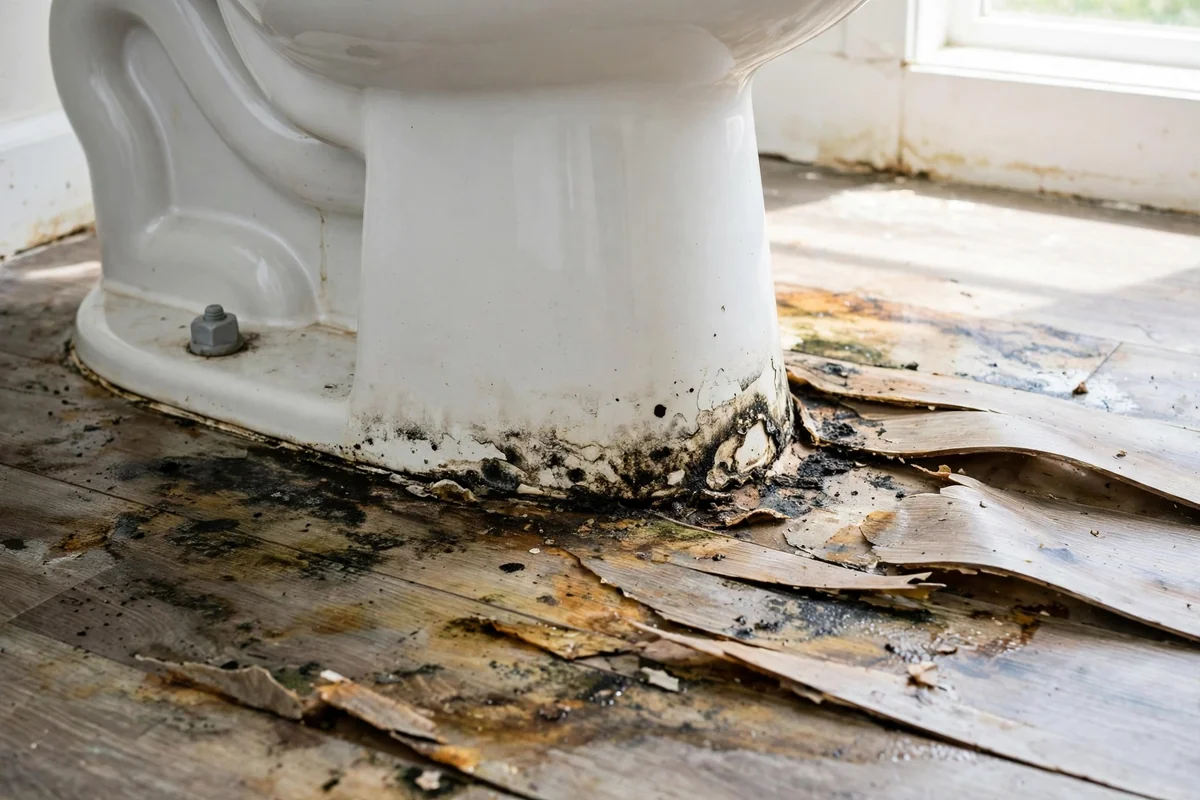
The Wax Ring and the Flange: What Holds the Seal
The wax ring is a simple part with a demanding job. It sits between the bottom of the toilet and the floor flange, a ring-shaped fitting fixed to the floor that connects the toilet outlet to the drain pipe. When the toilet is set down, the wax compresses and forms a watertight seal that also blocks sewer gas. It works well for years, but it has two weaknesses: it cannot flex, and it cannot recover once it has been compressed and then moved. A toilet that rocks, even slightly, breaks the seal a little more with every movement, and once the seal is broken it does not reseal itself.
The flange matters as much as the wax. It should sit level with the finished floor, or slightly above it, and it should be firmly fixed to the subfloor. If the flange is cracked, corroded, set too low, or loose, a new wax ring alone will not hold a seal, because the toilet will rock on the uneven fitting and break the seal again. That is why a proper wax ring repair involves lifting the toilet, inspecting the flange, and repairing or replacing the flange before the toilet is reset. A toilet set on a bad flange will rock and leak just like the old one, however new the wax ring is.
Replacing a wax ring is a job that starts with the water off and the toilet drained, then the toilet lifted and set aside, the old wax scraped away, and the flange and the floor underneath inspected. That inspection is the valuable part of the job: it is the only time the subfloor under the toilet can be seen, and it can reveal soft or rotted wood, a cracked flange, or a drain pipe that needs attention. If the floor is sound and the flange is solid, the toilet is reset on a new wax ring or a non-wax seal, bolted down level, and flushed several times while the base, the tank bolts and the supply connection are checked for leaks. If the floor is damaged, the toilet stays off until the floor is repaired, because setting a toilet on a rotted subfloor guarantees the seal will fail again.
Some homeowners notice a leak at the base and try to stop the rocking by tightening the bolts at the base of the toilet. That is a mistake worth avoiding. The bolts hold the toilet to the flange, and tightening them against a corroded or broken flange can crack the porcelain at the base of the toilet. A toilet that has been rocking has usually already broken its seal, and tightening the bolts does not restore it. The toilet needs to come up, the flange needs to be inspected, and the seal needs to be replaced properly.
Condensation or Leak: How to Tell the Difference
A sweaty tank is condensation on the outside of the toilet tank, and it is common in humid bathrooms. Warm, humid air meets the cold water inside the tank, and moisture forms on the porcelain, runs down the side of the tank and pools on the floor. It looks like a leak, and it can leave a damp patch that returns after mopping, but the water is on the outside of the tank rather than coming from a fitting, and the floor underneath the toilet stays dry. It is most noticeable after hot showers, in summer, and in bathrooms with poor ventilation.
Telling condensation from a leak is a matter of drying and watching. Dry the outside of the tank and the floor thoroughly, then check again after a few hours without flushing. If moisture returns on the tank without any water at the base, and the supply connection is dry, condensation is the likely cause. Improving ventilation, running the bathroom fan during and after showers, and keeping the bathroom door open after use all help. If water returns at the base after flushing, or the supply connection is wet, the problem is a leak rather than condensation, and it needs a repair rather than a fan.
There is one more distinction worth making. A tank that sweats heavily can still damage flooring over time, because the water that runs down the tank reaches the floor and sits there. It is a slower and gentler problem than a wax ring failure, but it is not harmless. If the tank sweats every day and the floor stays damp, the cause is worth addressing, whether that means better ventilation, a tank liner, or a different approach to the humidity in the room. A local professional can tell the difference between condensation and a leak in a single visit, and that distinction decides whether the answer is a repair or a ventilation change.
What to Do When You Find a Toilet Leak
Find where the water is
Note whether the water is at the base, behind the toilet, or under the tank, and whether it appears after flushing or all the time. That observation identifies the source.
Turn off the water if needed
If water is spreading or the supply connection is dripping, turn off the shutoff valve behind the toilet by turning it clockwise. Do not force a stuck valve.
Mop up and protect the floor
Mop up water on the floor and put towels around the base to catch further drips. If water has reached carpet or wood flooring, lift what you can and ventilate the room.
Do not use the toilet until it is checked
If the leak is at the base, every flush puts more water under the toilet. Use another bathroom if one is available, and call for help.
Toilet Leaks in Fountain Valley Homes
Fountain Valley homes are particularly prone to base leaks for a reason tied to their age. Many houses were built in the 1960s and 1970s, and their toilets have been removed and reset at least once, whether for a bathroom update, a flooring change or an earlier repair. Every time a toilet is lifted and reset, the wax ring must be replaced, and if the flange was not checked at that time, a flange that was already cracked or set too low can go unnoticed for years. The seal holds for a while, then fails, and the first sign is water on the floor after flushing or a toilet that has started to rock.
Flooring changes are a common trigger. When a bathroom floor is retiled or a new floor is laid over the old one, the finished floor level rises, and the flange that was level with the old floor now sits below the new one. A wax ring can bridge a small difference, but a flange that sits too low leaves the seal thin and vulnerable, and the toilet may rock on the raised floor. That is why a toilet should be checked after any bathroom flooring work, and why a flange that is too low should be raised with a flange extension rather than bridged with extra wax.
Upstairs bathrooms deserve a special mention. A leak at the base of an upstairs toilet does not pool on the bathroom floor, because the water goes down through the floor cavity and appears as a stain on the ceiling below. By the time the stain is visible, the subfloor upstairs may already be soft. If a stain appears on the ceiling below a bathroom, the toilet above it should be checked even if the bathroom floor looks dry. The same applies to a musty smell in a room below a bathroom, which can be the first sign of a slow leak that has been running for weeks.
Rental properties face the same risks with less visibility. A tenant may mop up water at the base without reporting it, or may not notice a slow leak at all. A property manager who inspects a unit should check around the base of every toilet for dampness, soft flooring or a rocking bowl, and should ask tenants to report water on the floor promptly. A base leak caught early is a wax ring replacement. A base leak caught late is a wax ring replacement plus floor work, and the difference is measured in weeks of unnoticed water.
Supply Lines, Shutoff Valves and Tank Bolts
The supply line is the braided hose that carries water from the shutoff valve on the wall to the fill valve inside the tank, and it is one of the parts that fails most suddenly in a bathroom. A supply line can look sound from the outside while the braid has weakened, and the first sign of trouble is often a bulge in the hose, a corroded nut at either end, or a slow drip that appears after the valve has been touched. A supply line that fails while nobody is home can release a large amount of water in a short time, which is why a bulging or corroded line should be replaced promptly rather than watched for a few more months. Replacing a supply line is a short job, and it is often done at the same time as another toilet repair, because the line is already disconnected.
The shutoff valve, also called the angle stop, sits low on the wall or floor behind the toilet, usually to the left of the tank, and it lets you isolate the toilet without turning off the water to the whole house. There are two common types: a multi-turn valve with an oval or round handle that needs several full clockwise turns to close, and a quarter-turn valve with a flat lever that closes with a single turn of ninety degrees. Both types can seize if they have not been turned in years, and a valve that is forced can snap or leak. If a valve resists, it should be coaxed gently rather than forced, and if it will not close at all, the main water supply to the house is the next step. Turning the shutoff valve gently once in a while, so it does not seize, is a small habit that pays off when you need the valve in a hurry.
The tank-to-bowl bolts and gaskets are the parts that hold the tank to the bowl and seal the joint between them, and they harden with age in the same way as the flapper. A tank bolt with a hardened washer can leak onto the floor behind the toilet, and the leak can be mistaken for a supply line leak or a base leak, because the water runs down the back of the toilet and pools on the floor. The bolts should be checked whenever the tank is open for another repair, and they should be replaced if the washers are hard, cracked or corroded. Tightening a tank bolt too far can crack the porcelain, so the bolts should be snugged evenly, a little at a time, alternating from side to side, until the tank sits level and does not rock.
The floor around the toilet deserves the same attention as the fittings, because it is the part that shows the damage from a leak first. Soft flooring, tiles that have loosened, grout that has darkened, or a musty smell near the toilet are all signs that water has been reaching the floor for some time. A floor that feels spongy when you step on it near the toilet is a sign that the subfloor underneath has softened, and that is a problem that needs to be addressed before the toilet is reset, because setting a toilet on a rotted subfloor guarantees the seal will fail again. The inspection that happens when a toilet is lifted for a wax ring replacement is the only time the subfloor can be seen, and it is the most valuable part of that job, because it can reveal damage that was hidden for months.
There is one more leak source that is easy to overlook: the tank itself. A hairline crack in the tank can leak slowly, and the water runs down the back of the toilet and pools on the floor, where it looks like a supply leak or a tank bolt leak. A crack in the tank is a replacement question, not a repair question, because porcelain under constant water pressure does not hold a patch reliably. If a tank is cracked, the toilet should be replaced rather than repaired, and the toilet replacement page explains that decision. A local professional can tell the difference between a tank crack, a bolt leak and a supply leak in a single visit, and that distinction decides whether the answer is a part, a seal, or a new toilet.
Call for Toilet Leak Repair in Fountain Valley
Water at the base of a toilet is doing damage out of sight while it sits on the floor. Call now to describe where the water appears and connect with a local toilet repair professional who can discuss the help available.
Fountain Valley Toilet Repair Pros is a referral service connecting customers with local toilet repair professionals; it is not itself the service company.
Frequently Asked Questions
Why is water coming from under my toilet?
Water under the toilet after flushing usually means the wax ring seal between the toilet and the floor flange has failed, or the flange itself is cracked or loose. Water that is there all the time more often comes from the supply line or a crack in the bowl. A rocking toilet has usually already broken the wax seal.
How do I know if my wax ring has failed?
The signs are water on the floor at the base after flushing, a toilet that rocks or shifts when used, a sewage odour near the toilet, and soft or discoloured flooring around the base. A failed wax ring does not always leak visibly at first, so a rocking toilet should be checked even if the floor looks dry.
Can I just tighten the bolts to stop a toilet rocking?
No. Tightening the bolts against a corroded or broken flange can crack the porcelain at the base of the toilet, and it does not restore a wax seal that has already broken. The toilet needs to be lifted, the flange inspected, and the toilet reset on a new seal.
Is a toilet base leak an emergency?
It should be addressed promptly, though it is not always an immediate emergency in the way an overflowing toilet is. Every flush puts a small amount of water under the toilet, and that water damages the subfloor over weeks. If water is spreading across the floor, sewage is involved, or the ceiling below is wet, call for prompt help.
What is a toilet flange?
The flange, also called the closet flange, is the ring-shaped fitting fixed to the floor that connects the toilet outlet to the drain pipe. The wax ring sits on top of it and seals the connection. If the flange is cracked, corroded, loose or set too low, a new wax ring alone will not hold a seal.
Why is my toilet tank sweating?
Condensation forms when warm, humid bathroom air meets the cold water inside the tank. It is most common after hot showers and in summer. Dry the tank and watch whether moisture returns without flushing. If water returns at the base after flushing, or the supply connection is wet, the problem is a leak rather than condensation.
Can a leaking toilet cause mould?
A slow leak at the base adds steady moisture to the subfloor and the floor cavity, which creates conditions where mould and moisture problems develop. Ventilation helps the room but cannot dry out a floor cavity that is being wetted from below with every flush. Repairing the leak removes the moisture source.
How can I tell if a leak is from the tank or the base?
Watch when the water appears. Water that appears only after flushing points to the base seal. Water that is there all the time points to the supply line or the tank. Add food colouring to the tank and check whether colour appears in the bowl without flushing, which confirms a tank leak into the bowl.
What happens during a wax ring replacement?
The water is turned off and the toilet is drained, then lifted and set aside. The old wax is removed, the flange and the floor underneath are inspected, and a new wax ring or non-wax seal is fitted. The toilet is reset level, bolted down, connected, and flushed several times while the base and supply connection are checked for leaks.
Why does my upstairs toilet leak into the ceiling below?
A leak at the base of an upstairs toilet sends water down through the floor cavity, where it appears as a stain on the ceiling below. The bathroom floor upstairs may look dry. If a stain appears below a bathroom, the toilet above it should be checked promptly, even if no water is visible upstairs.
Need Toilet Repair? Call Now
Describe the toilet problem and discuss the help available for your specific situation.